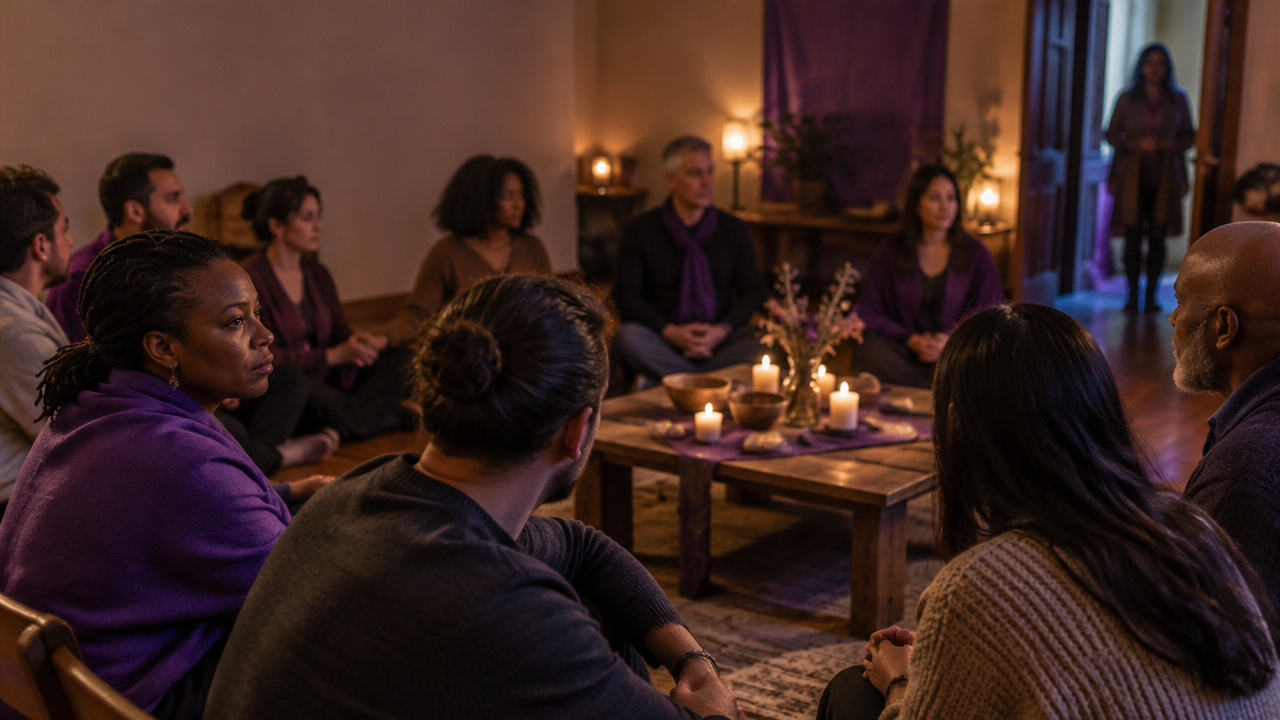


We often speak as if value judgments are purely personal. We say a person is strict, fair, tolerant, cold, or moral, as if judgment rises from private thought alone. In our experience, that is only part of the picture. Many judgments are shaped inside a shared emotional climate that people rarely name.
Value judgments often reflect the emotional tone of a group before they reflect clear individual reasoning.
A meeting becomes tense, and suddenly one small mistake feels unforgivable. A family carries old fear, and a child who asks for space is called selfish. A community feels wounded, and neutral acts begin to look threatening. We have seen this pattern again and again. What looks like logic on the surface may be loyalty to an unseen group feeling underneath.
Groups feel before they explain.
When we pay attention to these hidden emotional fields, we begin to understand why some moral reactions spread so fast, why certain people are judged more harshly than others, and why entire groups can mistake emotional pressure for truth.
What unseen group emotional fields do
By unseen group emotional fields, we mean the emotional atmosphere shared by a family, team, institution, or society. It may be made of fear, pride, shame, grief, anger, or even relief. Most people do not sit down and agree on it. They absorb it.
This field shapes what is praised, what is condemned, and what is ignored. It can make one type of behavior feel noble and another feel dangerous, even when both are ordinary.
We can notice this in several ways:
Groups reward emotions that fit the mood and reject emotions that disturb it.
People often judge faster when the shared emotional tone is intense.
Certain stories are repeated until they become moral frames.
Members learn what is safe to feel and what must stay hidden.
This is why emotional education matters in public and private life. When a group cannot identify its own emotional charge, it often projects that charge onto people, events, or ideas. That pattern appears often in collective behavior and in debates about social ethics.
Why people confuse judgment with truth
We tend to trust feelings that are socially confirmed. If many people around us react with disgust, outrage, or suspicion, our own judgment starts to feel more certain. We stop asking, “What am I perceiving?” and start saying, “This is obviously wrong.”
A shared emotional reaction can create the illusion that a judgment is objective when it is actually socially reinforced.
Research supports this. Studies on emotional nonconformity found that when people feel an emotion they see as fitting, but think their group does not share it, tension rises and group-based emotions become stronger. That work on emotional nonconformity and group-based emotions helps explain why people may adjust their judgments to match the emotional field around them.
We think many harsh judgments begin right there. Not in deep reflection, but in the fear of standing outside the emotional line of the group.

How emotions shape moral judgment
Not all emotions influence judgment in the same way. Anger does not judge like fear. Guilt does not judge like disgust. This matters because groups often carry one dominant emotion for long periods.
Research on how specific emotions affect moral judgments in different scenarios showed that moral evaluation changes depending on both the emotion and the situation. So when a group says it is defending values, we should ask which emotion is guiding that defense.
Another study on moral dilemmas found that incidental emotions can shift judgment by changing attention to consequences, norms, and action tendencies. We find this very telling. It means people may believe they are judging a moral issue, while an unrelated emotional state is steering what they notice most.
In daily life, this can look simple:
A fearful group gives more weight to risk than fairness.
An angry group focuses on blame before context.
A guilty group accepts limits it would otherwise question.
A shamed group punishes visibility, boldness, or difference.
These patterns are also tied to the need for emotional education and personal self-regulation, because people who can name what they feel are less likely to confuse mood with moral fact.
What happens inside teams and social systems
A team can say it values honesty, yet punish honest feedback. A family can say it values love, yet condemn emotional independence. A society can praise justice, yet react from moral outrage before it understands the full event.
That contradiction makes more sense when we see judgment as part of a wider emotional system. An integrative review on moral emotions in teams showed that these emotions shape team conduct, ethics, and shared decisions. In short, group feeling is not background noise. It helps organize what people call right and wrong.
We also see this in punishment. Research found that moral outrage links perceived harm and culpable intent in third-party punishment decisions. This helps explain why some groups move quickly from injury to blame. The emotional charge fills in gaps before careful thought has time to work.
Sometimes the story is old. A workplace still reacts from years of mistrust. A family still judges from an earlier wound. A social group still treats caution as virtue because of an inherited fear. These lingering patterns often come into view through systemic constellation work, where hidden loyalties and emotional inheritance become easier to see.

How we can notice these fields in real life
We do not need dramatic events to detect a group emotional field. We can notice it in repeated reactions. We can notice it in what becomes unsayable. We can notice it in the speed of approval or blame.
If the same type of person is always judged harshly, the issue may be emotional patterning, not just principle.
We suggest watching for a few signs:
The group reacts before facts are clear.
People use moral language, but the tone feels more like fear or anger.
Dissent is treated as betrayal rather than contribution.
One emotional style is accepted while others are mocked or silenced.
We have all been in rooms where this happens. At first, it feels normal. Then someone asks a calm question, and the room tightens. That tightening tells a story. It says the group is protecting an emotional order, not only a value.
Conclusion
Value judgments do not arise in isolation. They are shaped by memory, belonging, fear, loyalty, and shared emotional habits. The words may sound rational, but the force behind them is often collective and only partly conscious.
When we learn to see unseen group emotional fields, our judgments can become more honest and less reactive. We gain space to ask better questions, to slow down blame, and to separate living values from inherited emotional pressure. That shift does not weaken ethics. It makes ethics more human.
Frequently asked questions
What are value judgments in psychology?
In psychology, value judgments are evaluations about what is good, bad, acceptable, unfair, moral, or wrong. They are not based only on facts. They are also shaped by emotion, beliefs, past experience, and social influence.
How do group emotions affect decisions?
Group emotions affect decisions by shaping attention, urgency, and moral tone. A fearful group may choose control, an angry group may choose punishment, and a guilty group may choose submission. Shared feeling often guides what the group sees as reasonable.
Can value judgments be unconscious?
Yes. Many value judgments happen with little awareness. People may think they are making a neutral moral choice while reacting to hidden shame, fear, loyalty, or pressure from the emotional climate around them.
Why do groups form shared beliefs?
Groups form shared beliefs because people seek belonging, safety, and meaning. Repeated emotional experiences create common interpretations, and these interpretations become shared beliefs over time. The belief often protects the emotional order of the group.
How can I notice emotional group fields?
You can notice emotional group fields by observing repeated reactions, topics that trigger fast blame, emotions that seem allowed or forbidden, and the way dissent is handled. If the same emotional pattern appears across situations, a shared field is likely shaping the group.