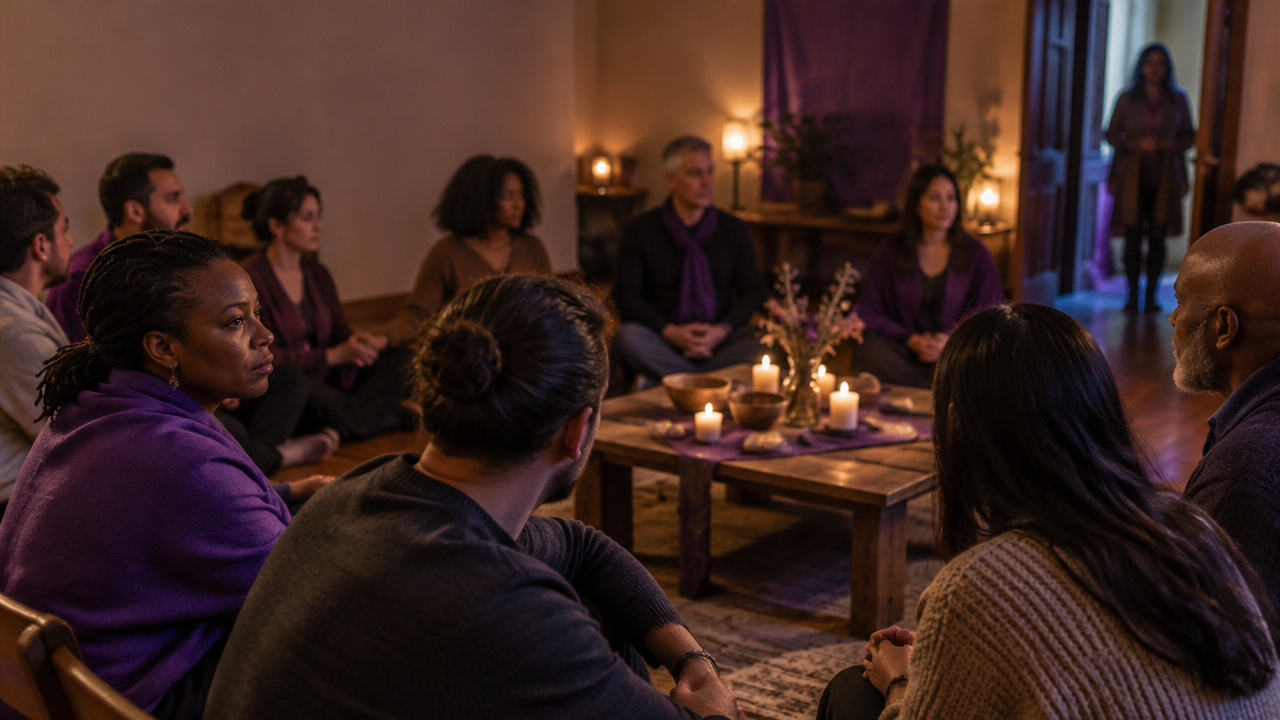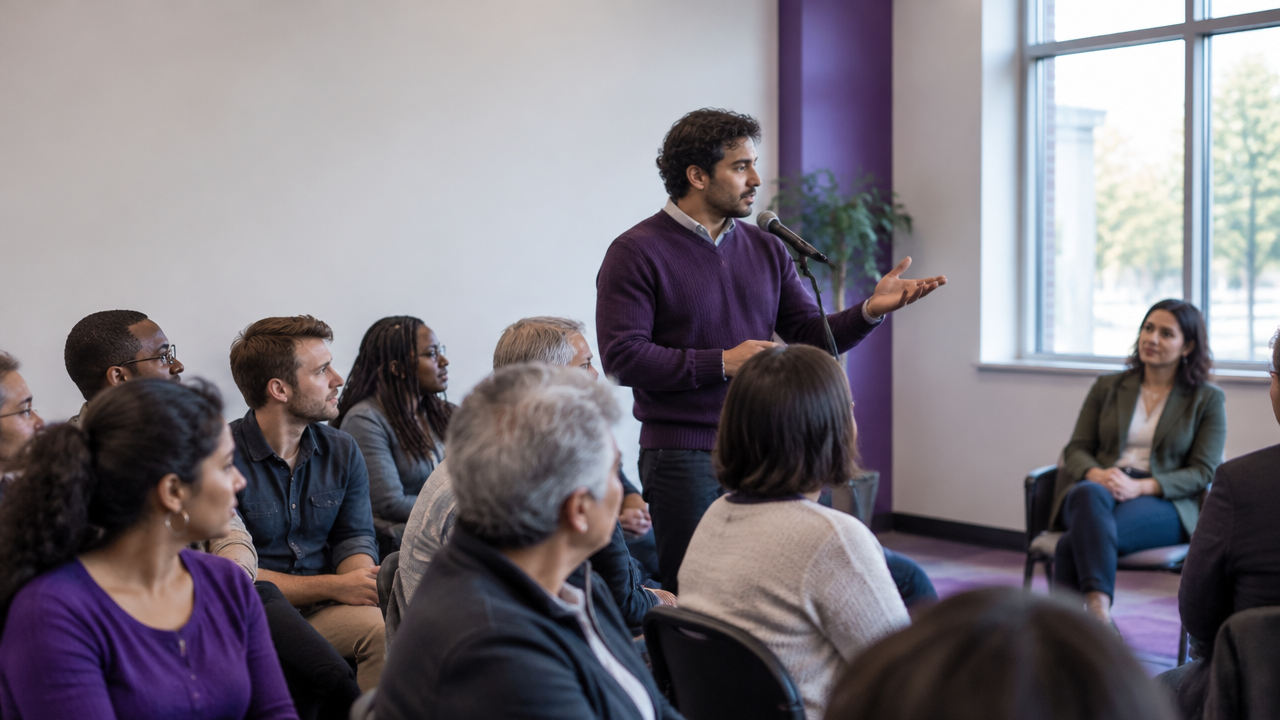

We often talk about low community participation as if it were only a matter of time, money, or public interest. Those factors matter, but they do not tell the whole story. In our experience, many groups become quieter for another reason that people rarely name out loud: collective envy.
Collective envy is the shared discomfort that appears when one person or one group is seen as receiving more recognition, influence, or success than others.
It does not always look dramatic. Sometimes it appears as cold silence after someone does well. Sometimes it looks like a meeting where good ideas are ignored because of who brought them. The result is subtle at first, then social. People pull back.
That matters because participation is already uneven. Data from a 2019 Pew Research Center report on community group involvement found that 57% of Americans take part in at least one community group, with higher participation among people with more education and income. When emotional barriers enter the picture, the distance can grow even more.
It turns shared purpose into status watching
Healthy participation begins with a common aim. People gather because they care about safety, belonging, learning, faith, justice, or neighborhood life. But collective envy changes the emotional focus. Instead of asking, “What does the group need?” people begin asking, “Why are they getting attention?”
We have seen this shift in simple settings. A volunteer coordinates a successful event. Instead of relief or gratitude, the room tightens. Praise becomes scarce. Others start watching the person rather than supporting the work.
Attention moves. Trust drops.
Once that happens, every action can feel loaded. A person who speaks often is called controlling. A person who receives thanks is seen as self-promoting. A person with skill becomes a threat. This emotional climate weakens the sense of common effort and creates hidden competition inside a space that should feel cooperative.
When communities want a deeper emotional reading of group conduct, we often suggest reflecting on patterns linked to collective behavior. It helps people see that participation is not driven by ideas alone, but also by emotional currents.
It makes capable people withdraw
One of the clearest effects of collective envy is retreat. People who are active, creative, or generous begin to hold back. Not because they stop caring, but because every contribution comes with tension.
When contribution is punished with suspicion, people learn that silence feels safer than service.
We think this is one of the saddest losses in community life. The people most ready to help often become the ones most exposed to resentment. After enough side comments, exclusion, or passive resistance, they reduce their presence. They stop proposing. They stop leading. Sometimes they leave without saying why.
This is not only personal. It affects the whole group. Research drawn from data on participation in collective responses to crime showed that only about 10% of respondents took part in such responses, yet they accounted for over half of neighborhood organization participants. In many communities, a small group carries a large part of the public effort. If envy drives those people away, the structure becomes fragile very quickly.

It replaces honest feedback with quiet sabotage
Every group needs feedback. Strong communities improve because people can disagree without trying to wound each other. Collective envy blocks that process. Instead of direct conversation, it encourages hidden resistance.
That resistance may take a few common forms:
Withholding information that would help a project succeed.
Minimizing another person’s effort in public or private.
Delaying decisions so visible contributors lose momentum.
Spreading doubt without offering a better path forward.
We have noticed that groups in this state often say they value fairness, yet they stop rewarding sincere effort. The emotional rule becomes unspoken but clear: do not stand out too much. That rule damages growth because improvement depends on people being willing to bring their full ability into the room.
This is where emotional education can change outcomes. Work connected to emotional education helps communities name reactions before those reactions become habits. Once envy is seen clearly, it becomes easier to interrupt it.
It spreads emotional fatigue through the group
Envy is not only social. It affects inner life. A longitudinal study of nearly 18,000 adults, presented in research on envy and psychological health, found that envy can harm mental health and well-being. We should not treat that as a private issue alone. In groups, emotional strain travels.
If many members carry comparison, bitterness, or humiliation, meetings feel heavy. People enter guarded. They read tone too closely. They assume exclusion where there may only be confusion. This makes participation feel emotionally expensive.
We sometimes hear people say, “I do not have the energy for that group anymore.” That sentence often points to more than busy schedules. It may describe a place where unresolved emotions have made simple cooperation tiring.
Communities weaken when emotional energy is spent on comparison instead of connection.
Practices related to self-regulation can help here. When people learn to pause, name their reactions, and separate insecurity from fact, they reduce the chance that envy will steer behavior.
It deepens inequality in civic life
Collective envy does not affect every group in the same way. It often grows faster where people already feel unseen, under-resourced, or shut out. In those settings, another person’s progress can feel like proof of one’s own neglect. That does not make the reaction healthy, but it does make it understandable.
Public participation data reflect these uneven conditions. According to community health data on civic participation in San Francisco, about 20% of adults meet informally to address community problems and around 10% to 14% volunteer with community organizations, while voter turnout is often lower in more disadvantaged neighborhoods. When exclusion is already part of daily life, envy can take root in the spaces that should restore trust.
We believe communities need both structure and ethics to respond well. Clear roles, shared credit, and fair recognition reduce emotional distortion. So does a moral culture that refuses humiliation. Conversations linked to social ethics can support this shift by asking not only what groups do, but how they treat human value while doing it.

Conclusion
Collective envy weakens community participation in ways that are quiet but far-reaching. It turns shared purpose into status watching, pushes capable people into retreat, replaces feedback with sabotage, spreads emotional fatigue, and deepens civic inequality.
We do not think the answer is to shame people for feeling envy. The answer is to bring more awareness to it. A group becomes stronger when it can notice comparison without obeying it, honor ability without suspicion, and share recognition without fear. Communities do not grow only through plans. They grow through emotional maturity.
For readers who want to follow reflections shaped by this kind of work, our perspective can also be seen through the writing of our team.
Frequently asked questions
What is collective envy in communities?
Collective envy in communities is a shared emotional pattern in which people react negatively to the success, visibility, or influence of others in the group. It is not just one person feeling jealous. It becomes a group climate that shapes trust, recognition, and cooperation.
How does envy affect participation rates?
Envy lowers participation rates by making community spaces feel unsafe or unrewarding. People may stop volunteering, sharing ideas, or attending meetings when they expect criticism, exclusion, or hidden resentment in response to their efforts.
How can groups overcome collective envy?
Groups can overcome collective envy by naming emotional tension early, sharing credit fairly, creating clear roles, and building habits of honest feedback. It also helps when members practice self-awareness and learn how to regulate comparison before it turns into harmful behavior.
What are signs of collective envy?
Common signs include cold reactions to success, reluctance to praise good work, gossip about visible contributors, resistance to capable leaders, and subtle efforts to block progress without open discussion. These signs often appear before participation visibly drops.
Why does envy weaken community bonds?
Envy weakens community bonds because it replaces goodwill with suspicion. Instead of feeling joined by a shared aim, people begin to compare, defend, and withdraw. That shift reduces trust, and without trust, participation becomes harder to sustain.