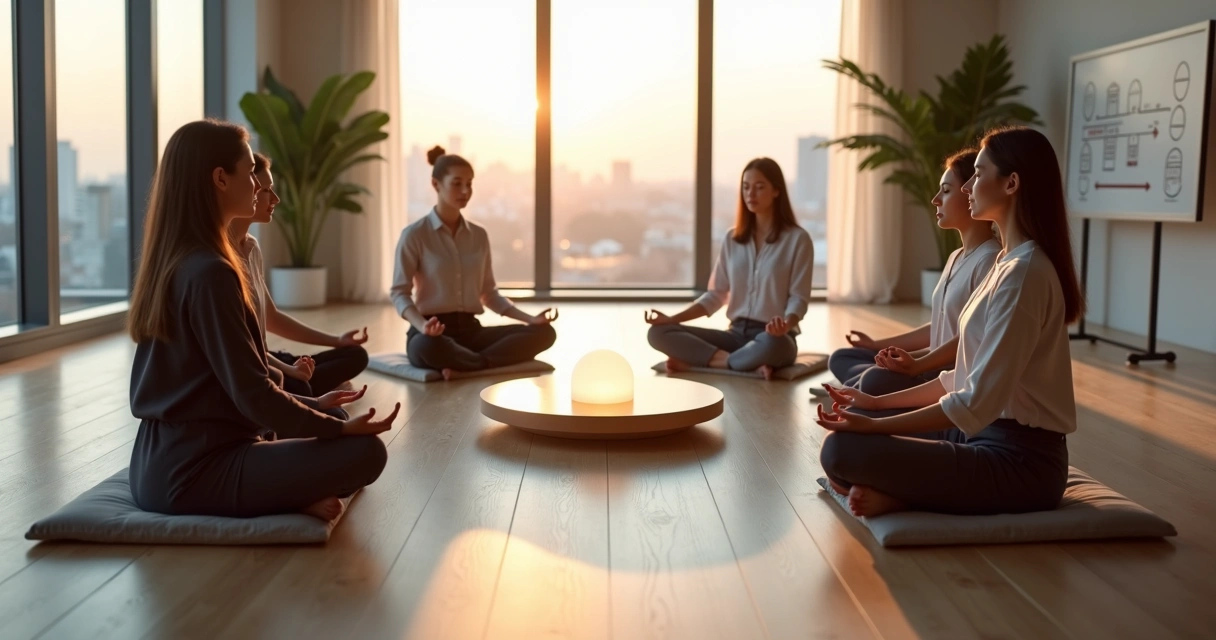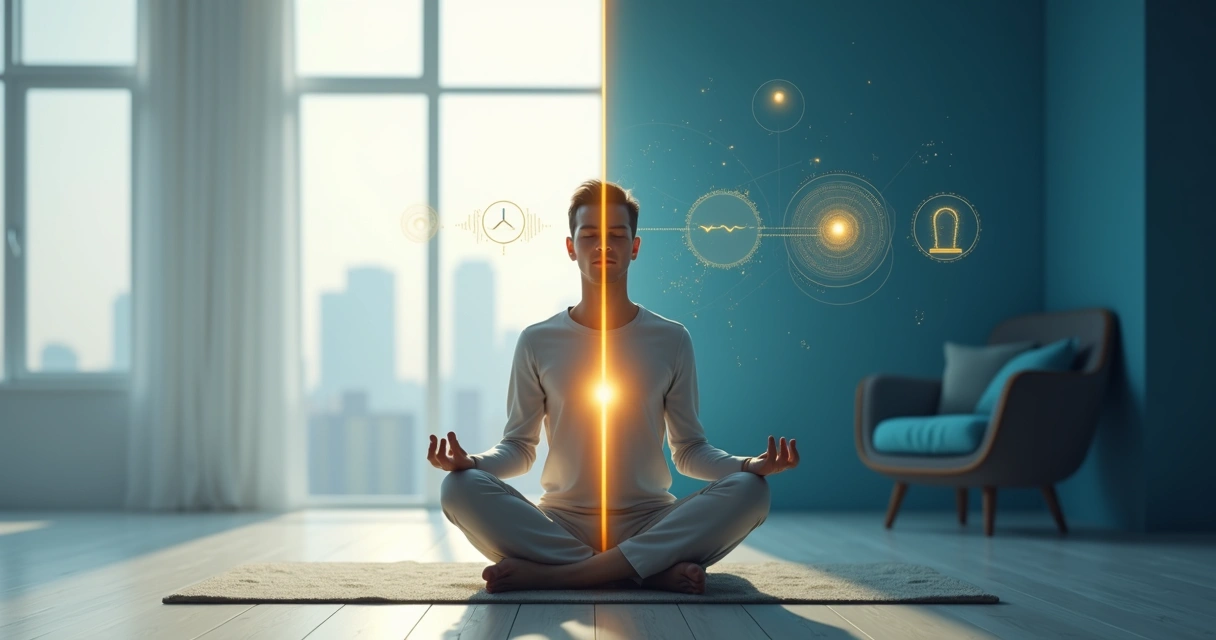

A noisy inbox waits for answers. Colleagues shuffle past, as screens flicker with more to do and less time to feel. The tempo of the modern workplace often leaves us seeking brief escapes that never last long. Stress seems to renew itself faster than the relief can come. But what if there was a practice not just to pause the chaos, but to change how it cycles through teams and minds? We believe that is not a distant wish, but an intentional practice. It has everything to do with the way emotion moves inside groups, and the art of meditation—seen in a new way.
What makes workplace stress cycle?
We have seen it: stress rarely lands as a one-time event. Instead, it works in loops. First, feelings of anxiety, urgency, or isolation rise in one person, then ripple out to others. In most workplaces, these feelings turn invisible. They shift behavior—making teams less open, leaders more controlling, and communication snappier. The original pressure turns into small conflicts, missed chances to support, or quiet disengagement.
Over time, these indirect effects become the culture itself. The stress is no longer only individual. It is held, transferred, and learned through unspoken norms. In our experience, the cycle of workplace stress continues for three main reasons:
- Unseen emotional fields: When emotions are ignored or repressed, they silently shape decision making, trust, and collaboration.
- Lack of emotional education: Without understanding and nurturing emotions, people default to old habits: avoidance, denial, or blame.
- Absence of shared regulation tools: Workplaces often miss ways for groups to reset their emotional tone together.
This is not just a personal issue. It’s a collective challenge.
How meditation changes the emotional field
Meditation is often discussed as a method to calm the mind or relieve stress, but from our perspective, it can become more than that. Marquesian meditation, in particular, is shaped for reading, understanding, and transforming not only personal emotions but also the collective field of a workplace. Instead of aiming only for individual calm, this approach says:
Feelings are not private—they shape the group.
This sense alone is powerful. When we practice a type of meditation that connects inner experience with outer interaction, we loosen stress at its foundation, not just its surface.
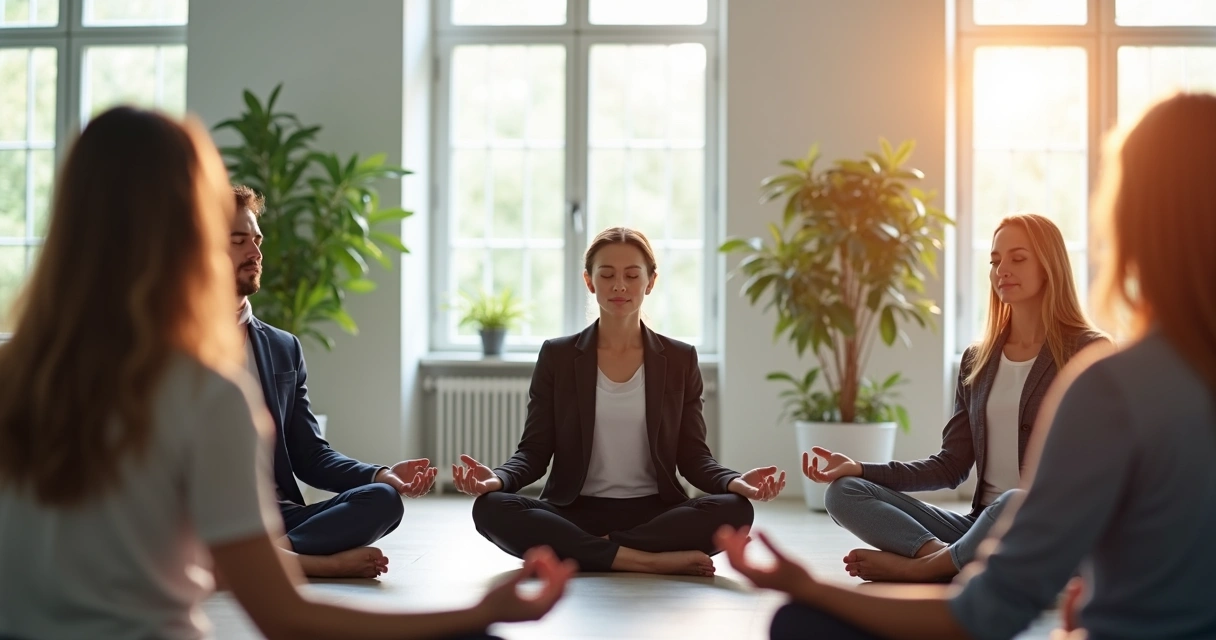
Key steps in Marquesian meditation for workplace stress
In our experience, Marquesian meditation moves through distinct phases, each targeting a layer of the stress cycle:
- Recognition of the collective field: Rather than focusing only on personal breath or heartbeat, practitioners take time to sense the emotional field of the team or organization. This means gently tuning in to the emotions circulating beyond personal thoughts.
- Inclusion of all feelings: All emotions—pleasant or unpleasant—are acknowledged without judgement. When fear, anger, or fatigue are accepted as natural, their energy becomes available for understanding instead of suppression.
- Self and group regulation: Techniques such as slow breathing, guided awareness, or short collective silences are practiced to bring nervous systems back to balance. Both the individual and the emotional field are invited into steadiness.
- Integration: As states of calm and connection grow, these are consciously brought back into action—meetings, emails, decisions, and daily tasks. The effects are felt far beyond the meditation circle.
This approach brings emotional clarity not only to the person practicing, but to their environment as well.
Why does it break stress cycles at work?
We have asked ourselves this directly—and the answer comes back to how emotion moves between people. When workplace meditation is designed for collective awareness, something new appears.
- Shared presence: Instead of acting from old stress habits, team members can meet each moment as it comes. This blocks the automatic ripple of stress reactions.
- Reduction of hidden tension: When everyone is allowed to be present with what they feel, less energy is spent hiding or fighting those feelings. It is freeing and disarming.
- Formation of trust: Teams that meditate together often communicate more openly. They are less likely to pass along stress through blame or defensiveness.
- Creative solutions: When calm replaces panic, creative or overlooked answers to problems can arise.
When we regulate emotion, we regulate behavior.
Stories from the practice floor
Let’s paint a small picture. We recently saw a department where weekly meditation circles were set up, using the steps above. At first, skepticism was easy to see—crossed arms, nervous laughter. But after each session, small changes showed up.
- People paused before raising their voices in meetings.
- Group decisions were less rushed, more thoughtful.
- Tensions around deadlines became moments to check in, not shut down.
As one participant quietly said, “The fights just started to fade out.”
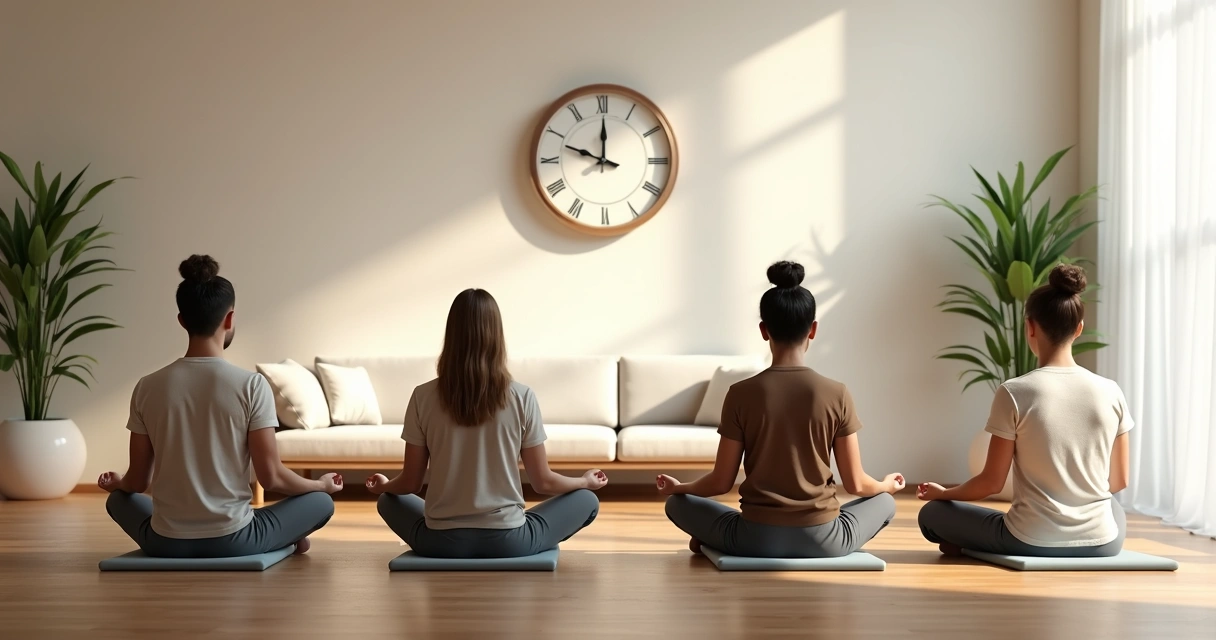
These daily habits touched everyone—not only those who joined the formal circles, but everyone in the team. The cultivated emotion became part of the workplace atmosphere.
Connection to emotional education and collective behavior
This way of working with stress is not only about removing discomfort. It brings a new approach to self-regulation, letting each person understand and manage their own state, while seeing how it shapes the group. This builds a foundation for emotional education, an idea explored in depth at emotional education. The benefits do not end at the office door: they move outward into social ethics and a more balanced society.
Workplace meditation also provides a living lesson in social ethics. By bringing emotion out of its hidden corners, shared understanding and mutual respect grow. This connects to bigger questions of collective behavior, helping to reveal and transform inherited emotional patterns.
What’s remarkable, in our view, is that these results appear without huge resources, slogans, or outside pressure. Systemic constellation approaches show us how group patterns can shift when even a few members change their emotional tone. Meditation, in this sense, becomes not only personal maintenance—but genuine social transformation.
Conclusion
Workplace stress, when left unchecked, repeats itself. Yet it is not an inescapable cycle. When we give attention and care to the emotional field—acknowledging, welcoming, and regulating it—we can break old patterns and create the ground for real change. Marquesian meditation offers a concrete way to do this together. Calm becomes a resource in daily action, not a rare break from reality.
We have seen it ourselves. When even a few begin to sit in such awareness, the group changes. New responses, new hope, new balance. This is not just better work—it is better living, together.
Frequently asked questions
What is Marquesian meditation?
Marquesian meditation is a form of guided awareness practice that connects individual emotions with the collective environment, especially in group or workplace settings. It focuses on recognizing and integrating the shared emotional field, not just personal feelings. This approach blends mindfulness, emotional awareness, and group presence to nurture healthier patterns of interaction and decision making.
How does it reduce workplace stress?
It works by helping individuals and teams notice, accept, and regulate both individual and shared emotions. Instead of hiding stress, participants learn to meet it directly, transforming tension into cooperation and openness. This collective awareness stops the cycle of automatic reactions, creating room for better communication and support.
Who can practice Marquesian meditation?
Anyone interested in improving workplace well-being can participate. There are no strict requirements. Both individuals new to meditation and those with experience can benefit, as the practice is adaptable to different backgrounds and group sizes.
Is Marquesian meditation hard to learn?
Most people find the basics straightforward. Guidance usually starts with simple awareness and gentle acceptance of current emotions. With regular use, the skills deepen naturally. As in many practices, patience and openness are more helpful than perfection.
Where can I try Marquesian meditation?
It can be practiced in any quiet setting—meeting rooms, break spaces, or even virtually, with guidance from someone familiar with the approach. Many people start with short sessions in small groups at the workplace, building consistency over time.