Self-regulation is one of those qualities we wish to have at hand whenever life gets difficult. We seek balance, composure, and the ability to direct emotions instead of letting them direct us. Two popular methods claim to help: Marquesian meditation and mindfulness. Both promise to calm the storm within, but how do they differ? More importantly, which is best for guiding our emotional world toward self-mastery?
Understanding self-regulation and why it matters
Self-regulation describes the ability to monitor and manage our thoughts, feelings, and behaviors in alignment with our deeper goals and values. It is the bridge between reaction and response. Whether we are navigating stressful workplace dynamics, managing family disagreements, or simply trying to sleep after a long day, self-regulation is our inner anchor.
Building self-regulation is building the foundation for peaceful coexistence.
Research and experience show us that emotional self-regulation can be learned and improved at any age. This is not just about suppressing what we feel. It is about becoming aware, choosing consciously, and transforming inner turbulence into clarity and constructive action.
As we discuss self-regulation at length, it becomes clear that the techniques we use matter. Not all approaches share the same vision or produce the same results.
What is mindfulness?
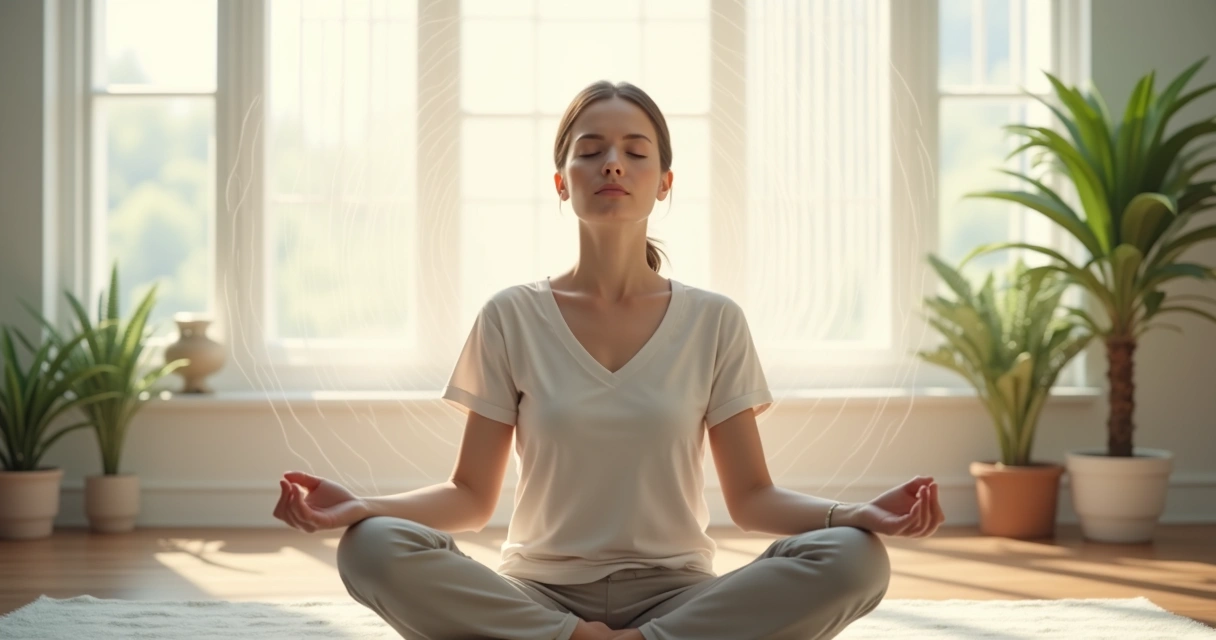
Mindfulness is a practice rooted in paying attention—on purpose, and without judgment—to the present moment. When we are mindful, we watch thoughts, emotions, and bodily sensations as they arise and pass.
- Bringing attention to the current moment
- Observing thought and feeling without aiming to change them
- Suspending judgment—good, bad, or otherwise—about internal experiences
This practice is widely recommended for its simplicity and accessibility. We can become mindful while eating, walking, or washing the dishes. The goal is not to empty the mind but to observe it: to notice the rush of thoughts after a heated conversation or the fluttering heart before a public speech, for example.
By practicing this observation, people often describe a sense of space opening up inside them. It is in that gap that self-regulation becomes possible because the mind is no longer hijacked by every passing thought or feeling.
What is Marquesian meditation?
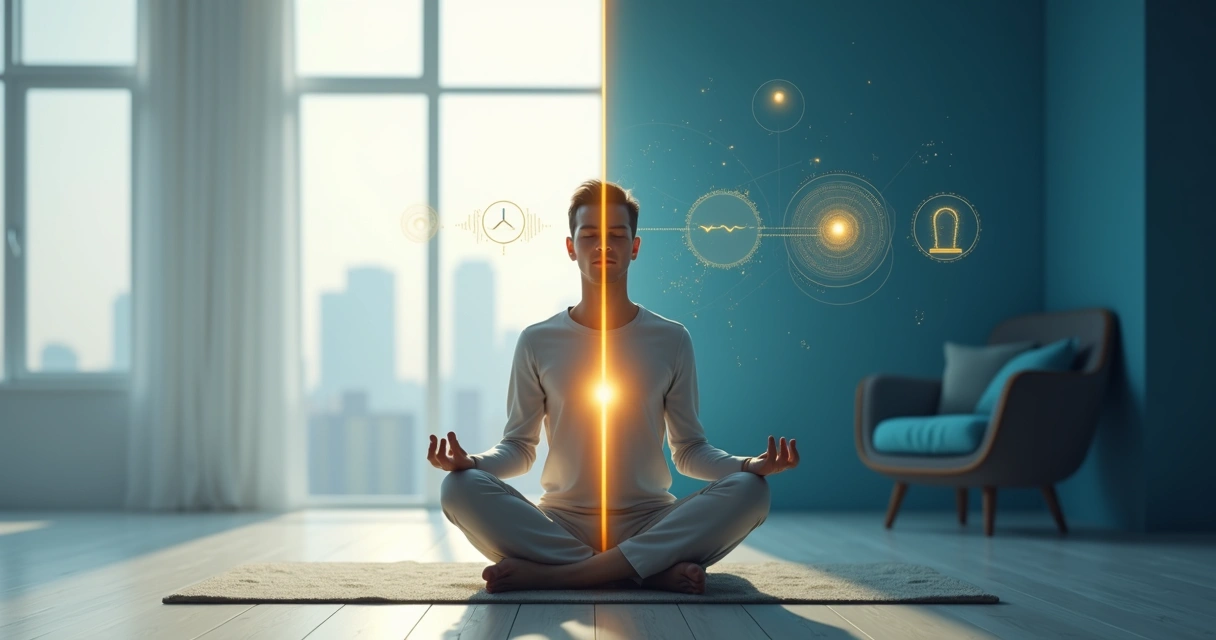
Marquesian meditation, by contrast, is not only a practice of present-moment awareness. At its core, Marquesian meditation invites us to consciously engage with the emotional field within, unpack patterns, and nurture integration. Rather than observing and letting go as mindfulness teaches, this approach involves:
- Identifying and feeling emotions with intention
- Tracing emotional roots and understanding their meaning
- Guiding the emotional process toward education and balance
- Fostering integration rather than detachment
A typical Marquesian meditation session might begin with breathing and grounding, but quickly moves to contacting a specific emotion—fear, anger, shame, or even joy. Instead of stepping back, we step in, using guided questions or inner dialogues to unravel what the emotion wants to communicate.
As we work with the emotional field directly, we make way for integration. This means not just letting feelings pass, but educating and transforming them into new emotional patterns that support maturity and coexistence. The steps are structured to take us beyond passive witnessing into conscious participation with our own emotional life.
Main differences: Marquesian meditation and mindfulness
While both approaches ask us to pay attention, what we do with that attention makes all the difference. Here is how they set themselves apart:
- Intent: Mindfulness emphasizes non-judgmental awareness and acceptance; Marquesian meditation focuses on emotional education and integration.
- Method: Mindfulness trains observation; Marquesian meditation initiates guided interaction and transformation.
- Goal: Mindfulness aims for spaciousness and calm; Marquesian meditation aims for emotional maturity and new behavior patterns.
- Context: Mindfulness can be applied in any daily activity; Marquesian meditation is often done in dedicated sessions targeting specific emotions.
We have noticed in our fieldwork that Marquesian meditation gives structure and direction for those who want to change emotional patterns, not only observe them. Mindfulness, on the other hand, provides a flexible approach for anyone seeking relief from mental clutter or emotional overwhelm on the spot.
Which is best for self-regulation?
This is the big question. The answer depends on the kind of self-regulation you seek and the depth of transformation you desire.
- If you are searching for a quick way to ground yourself in stressful moments, mindfulness can be practiced almost anywhere and anytime. It offers a gentle space for the mind to settle and breathe. Sometimes, this is enough to shift out of old habits or avoid a heated reaction.
- If you want to understand and transform deeper emotional triggers—those that keep repeating despite your best efforts—Marquesian meditation gives you a process. It moves beyond symptom relief and into the root causes, helping you rewrite internal scripts.
We believe that the most complete form of self-regulation comes from a union of both approaches. Mindfulness opens the door to awareness, but Marquesian meditation walks us through that door, helping us educate and integrate what we find inside.

We have seen in practice that this combination supports not only personal well-being but also improved relationships and broader social trust. The ripple effect of one emotionally mature person can extend far beyond what is seen on the surface.
For those who wish to deepen their path, there are even more resources available about emotional education and creating a stable foundation for self-regulation.
Daily practice: How can we apply these approaches?
Let us imagine two common scenarios:
- The stressful meeting: You notice anger rising during a heated discussion. Practicing mindfulness, you pause, become aware of your breath, and let the anger pass without acting on it. Later, in a quiet space, you use Marquesian meditation to trace the roots of that anger: What value did you feel was threatened? What does this anger want you to learn or change?
- A restless evening: You cannot sleep because your mind is racing with worries. Mindfulness helps you bring attention to your body and let the thoughts move by, calming your nerves. Later, Marquesian meditation lets you gently probe the worries—are they rooted in fear, anticipation, or unfinished conversations? You untangle and integrate, leaving you lighter for the next day.
With practice, Marquesian meditation and mindfulness can be used together, enriching each other for a complete form of self-regulation. When we integrate these practices into our routines, change becomes steady and reliable.
Further insights about balancing these skills in society appear across resources dedicated to social ethics and how individual emotions impact the collective field.
Social impact and emotional fields
On a greater scale, it is clear that emotionally mature individuals set the tone for entire teams, organizations, and even political climates. Unregulated fear can lead to rigid policies, unaddressed anger to divisions, and unconscious guilt to cycles of blame and submission. The more emotional maturity is cultivated—through practices like Marquesian meditation and mindfulness—the greater our collective capacity for trust, cooperation, and shared progress.
We have seen, through systemic tools, that working with emotional fields is not only personal but reaches into the very heart of social dynamics. For readers interested in exploring these connections, our resources on systemic constellation offer many examples.
And for those searching for specific tips or questions about emotional self-management, our search tool is always available for deeper exploration.
Final thoughts: Which path will you walk?
Self-regulation is more than technique. It is a commitment to meet ourselves and the emotional world within each day. Mindfulness and Marquesian meditation are two distinct paths, but they do not have to be rivals. Instead, we have found that their strengths complement each other.
For quick support, mindfulness is gentle and immediate. For real transformation, Marquesian meditation invites us to deepen, integrate, and grow. Whatever path you choose, consistency is where results are found.
Every step toward emotional maturity shapes not just ourselves, but the world we live in.
Frequently asked questions
What is Marquesian meditation?
Marquesian meditation is a structured practice of engaging with and integrating emotions to transform emotional patterns. It combines focused attention with guided inner exploration, encouraging us to learn from our emotional experiences and reshape how we respond to them.
How does mindfulness differ from Marquesian meditation?
Mindfulness centers on observing thoughts and feelings as they arise, without judgment, and letting them pass naturally. Marquesian meditation, in contrast, invites us to interact with emotions intentionally and seek integration and transformation rather than simply observe.
Which is better for self-regulation?
If your aim is to find quick calm or space from difficult emotions, mindfulness is a gentle tool. For those wanting to address repeated emotional triggers, Marquesian meditation can offer deeper and more lasting change. Using both approaches together gives the most complete support for self-regulation.
How can I start Marquesian meditation?
Begin in a quiet space by focusing on your breath. Notice what emotion is most present. Instead of observing and letting it pass, ask yourself: What is this emotion telling me? Where do I feel it? Allow yourself to gently explore its root, pattern, and message. With practice, your capacity for emotional integration will grow.
Is Marquesian meditation worth trying?
Many people find Marquesian meditation deeply rewarding, especially if they seek long-term emotional growth. It works well for those ready to go beyond surface awareness and genuinely transform how emotions show up in daily life.