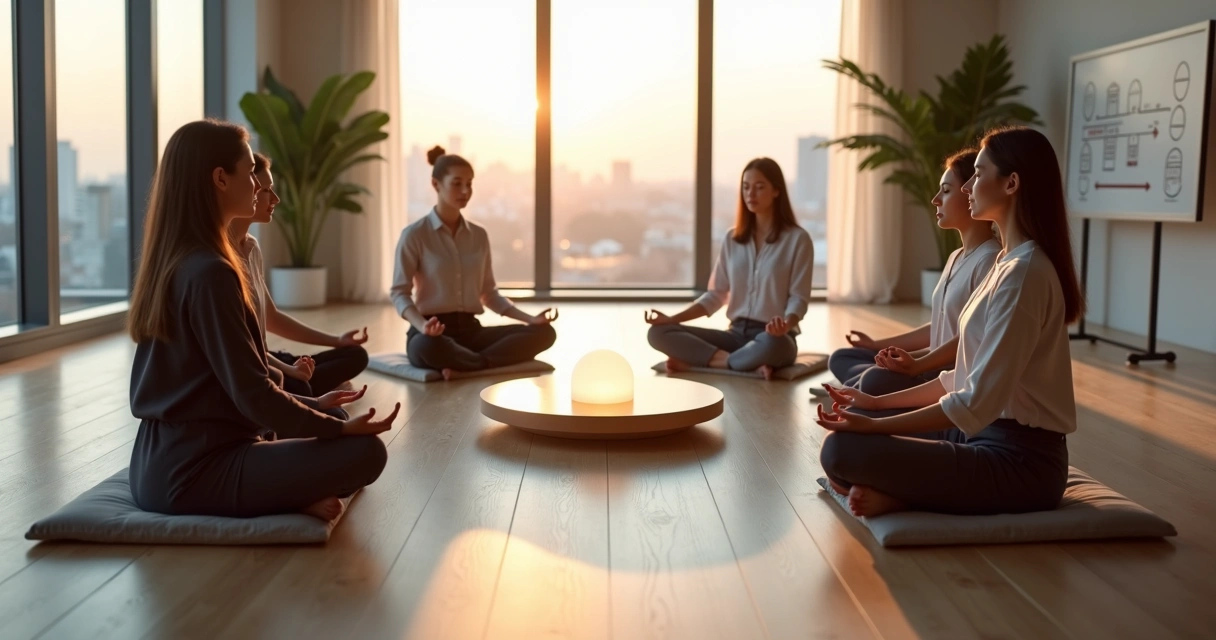
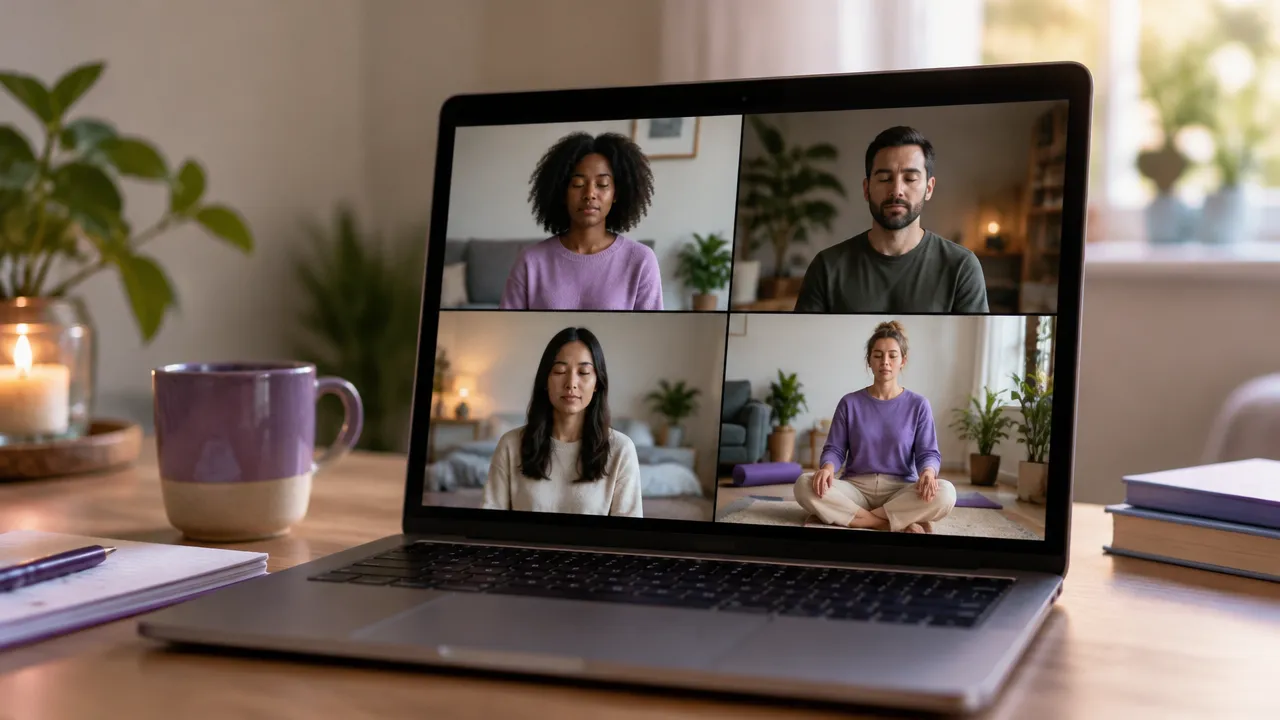
Marquesian meditation can turn an online meeting into a deliberate practice of self-awareness and shared presence. The steps below are for facilitators, community groups, and remote teams who want connection without pressuring anyone to perform calmness, disclose private feelings, or keep a camera on.
Key takeaways for a connected online practice
- Build connection through a shared structure, not a demand for identical experiences.
- Offer choices about posture, camera use, breathing, and speaking.
- Use a short, predictable sequence that makes room for settling, quiet, and reflection.
- Treat emotional awareness as information, not as a diagnosis or a problem to fix.
Marquesian meditation connects self-regulation with group awareness
In this article, Marquesian meditation means a reflective practice that brings attention to personal emotional states while respecting the effect people have on one another. It is a practical framing, not a clinical treatment or a guarantee of a particular outcome. A group can share the same pause while each person notices something different.
That distinction matters online. A quiet call does not automatically create trust, and visible participation is not proof of engagement. A facilitator can make the space more welcoming by naming the purpose, inviting consent, and allowing people to participate with their camera off or in silence. For a broader explanation of Marquesian meditation and self-regulation, connect the personal practice to the ability to notice an emotion before reacting to it.
Prepare the group before asking everyone to settle
Connection begins with clear expectations, not with a breathing instruction. Before the session, tell participants how long it will last, what they will be invited to do, and that they may pass on any activity. Ask them to choose a stable seat and, if comfortable, silence notifications.

At the start, acknowledge the reality of remote meetings: people may be tired, distracted, or joining from a busy place. Invite each person to select a posture that feels steady. Keep cameras optional, and avoid asking participants to share personal information in a group setting. These choices make the practice more accessible without requiring everyone to explain why they need them.
Use a simple 25-minute sequence for digital group connection
A reliable format reduces uncertainty and gives the group a common rhythm. Adjust the timing to suit the people attending, and explain that every step is an invitation rather than a test.
- Welcome, 2 minutes: State the purpose, duration, and participation options. Remind the group that passing is welcome.
- Arrive, 3 minutes: Invite participants to notice their feet, the chair supporting them, and one sound in the room. Eyes can remain open or closed.
- Check in privately, 4 minutes: Ask each person to notice a current state, such as rushed, settled, distracted, or uncertain. No one has to report it.
- Practice, 8 minutes: Guide attention to a neutral anchor, such as contact with the floor or ordinary breathing. Invite a gentle return when attention wanders. Do not require synchronized breathing.
- Reflect, 5 minutes: Offer a moment of silence, then invite optional responses to a neutral prompt, such as “What helped you feel present?”
- Close, 3 minutes: Ask participants to notice what they need next and end with a clear goodbye.
This sequence follows the logic of a structured group meditation practice: first create a safe container, then practice, then reflect. The breathing anchor is optional. Some people find breath focus uncomfortable, so offer another point of attention and let anyone pause.
Build genuine connection without forcing disclosure
Shared quiet can be meaningful even when nobody speaks. If you include reflection, use prompts that can be answered briefly or passed on, and do not interpret someone else’s emotions for them. The facilitator’s role is to protect the conditions for attention, not to make the group reach a particular emotional conclusion.
Set a few boundaries before the first session: do not record, do not interrupt a personal share, and do not repeat someone’s story outside the group without permission. If a participant becomes uncomfortable, remind them they can open their eyes, move, step away, or stop. A guide to emotional boundaries in groups can help facilitators think through consent and respectful participation.
What research can and cannot tell us about meditating online
Research supports care with claims about group effects. A 2021 pilot study examined video-guided meditation in different settings, including a simulated group context; it does not establish that live online groups produce a special or guaranteed effect. Its study of meditation and social connection is a useful starting point, not proof that every virtual group will feel connected.
More broadly, the CDC describes social connection as important to health and well-being. That does not mean a meditation call by itself will prevent loneliness or improve health. It does support a modest goal: create a respectful opportunity for people to feel seen, valued, and included. A CDC overview of social connection provides context for why belonging matters beyond a single session.
Review the practice and improve it over time
After each meeting, ask one or two optional, concrete questions: Was the timing comfortable? Did the choices make it easier to participate? What should change next time? Look for patterns without treating attendance, camera use, or quietness as a measure of emotional openness.
For an ongoing group, repeat the same core structure and make small adjustments based on feedback. That consistency helps participants know what to expect while leaving room for different needs. Digital group meditation works best when the shared practice strengthens agency and mutual respect, rather than asking individuals to fit a single idea of calm.
Frequently asked questions
What is group meditation?
Group meditation is a shared period of guided or silent attention practiced by two or more people. Participants may focus on breathing, bodily sensations, or a spoken prompt. Online, the shared rhythm comes from the same invitation and time together, not from everyone having identical thoughts or experiences.
How do you lead a virtual group meditation?
To lead a virtual group meditation, explain the format, invite participants to choose a comfortable posture, and offer a simple grounding cue. Guide a short period of quiet attention, then leave time for optional reflection. Let people keep cameras off, pause, or leave without needing to explain.
How long should an online group meditation last?
A 20 to 30 minute session is a practical starting point for many informal groups: it allows time to settle, meditate, and close without making the practice feel demanding. Shorten it for first-time participants, and ask the group what duration feels workable rather than treating one length as right for everyone.
How can beginners reach a deeper meditation in a group?
A deeper meditation is not the same as having no thoughts. Begin with a manageable anchor, such as the feeling of your feet on the floor, and gently return attention when it wanders. In a group, choose a position and level of participation that feel safe; depth cannot be forced or measured by silence.