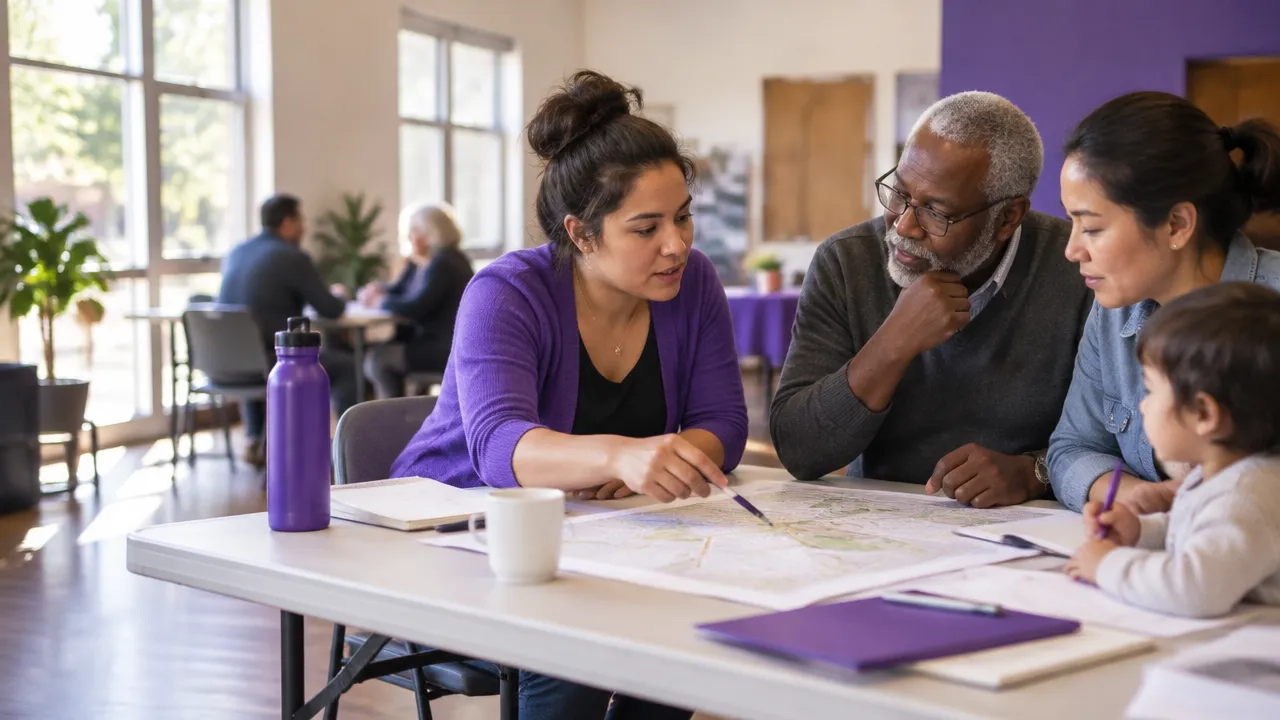


Intergroup relations are the patterns of interaction, perception, and power between people who identify with different groups. For community leaders, educators, and teams, building trust takes more than encouraging people to meet: it requires fair participation, shared purpose, and emotional conditions that make honest contact possible. Trust grows when people experience consistent respect, not when differences are ignored.
Key takeaways for building trust across groups
- Contact can reduce prejudice, but the quality and structure of contact matter.
- Equal voice, cooperation, shared goals, and institutional support make trust-building more credible.
- People need room to name harm or disagreement without being reduced to a group stereotype.
- Measure fair participation and follow-through, not just attendance or friendly interactions.
What do intergroup relations include?
Intergroup relations include how people from different social groups perceive, treat, and cooperate with one another, as well as how institutions distribute voice, resources, and status. Group boundaries may reflect race, religion, nationality, political identity, profession, or other shared categories.
These relationships are not simply friendly or hostile. A workplace may have warm personal connections across teams while still giving one team less influence over decisions. A school may celebrate cultural diversity while students from some groups feel routinely unheard. Understanding both individual interactions and wider structures helps reveal where trust is breaking down.
For example, when a neighborhood committee repeatedly asks residents from one community to share personal stories but does not include them in decisions, participation can feel extractive. Recognizing this pattern of subtle exclusion helps organizers address the process, not just ask people to be more welcoming.
How does an us-versus-them mindset damage trust?
Us-versus-them thinking turns group identity into a shortcut for judging people. Under stress, fear or anger can make ambiguous actions seem threatening, encourage negative assumptions, and make people defend their own group before hearing another perspective.
This does not mean group identity itself is the problem. Belonging can provide meaning and solidarity. The risk comes when loyalty requires denying another group’s experience, or when leaders use blame to redirect attention from shared problems. In public debate, for instance, labeling a whole community as responsible for one person’s actions can invite scapegoating rather than accountability.
Trust-building starts by slowing this emotional reflex. Ask what happened, whose perspective is missing, and whether the same standard would be applied to every group. That kind of reflection can interrupt collective scapegoating without pretending that real harm or unequal power does not exist.
What kind of contact helps groups trust one another?
Repeated contact is more likely to help when people meet as participants with meaningful standing, work toward a shared goal, and receive support from the organizations shaping the interaction. A meeting alone cannot erase a history of exclusion, especially if one group controls the agenda or bears all the emotional labor.
A 2006 meta-analysis by Thomas Pettigrew and Linda Tropp examined 713 independent samples across 515 studies. It found that intergroup contact typically reduced prejudice. The result supports creating opportunities for contact, while leaving room to ask whether a particular setting is fair and constructive. A study of a dialogue program in Ethiopia also found improved attitudes and trust, but no significant change in behavior in its trust game, a reminder that attitudes and actions do not always shift together. Explore the meta-analysis of intergroup contact and the randomized dialogue study for these findings.
A useful collaboration might bring residents from different communities together to improve a shared park. Participants identify priorities, divide responsibilities fairly, and make decisions together. The aim is not forced agreement. It is a real experience of being heard, contributing, and depending on one another.

How can a group create safer, fairer contact?
Trust grows when organizers design the conditions of contact instead of relying on goodwill alone. Before bringing people together, clarify who has decision-making power, what participants can influence, and how concerns will be handled.
- Set a shared, practical goal. Choose a task that matters to participants, rather than asking them to perform harmony for an audience.
- Share influence. Rotate facilitation, invite input in more than one format, and make clear how suggestions affect decisions.
- Agree on respectful boundaries. Allow difficult questions while preventing personal attacks, pressure to speak for a whole group, or demands to disclose painful experiences.
- Plan for repair. If someone is harmed or dismissed, name what happened, hear the impact, and agree on a concrete next step.
- Follow through. Report what changed, what did not, and why. Broken promises can deepen distrust.
These practices turn emotional safety into something observable: people can disagree, raise concerns, and still expect fair treatment. Leaders can strengthen that capacity through emotional self-regulation, especially when a tense conversation triggers defensiveness or fear.
How can you tell whether trust is improving?
Look for patterns in participation and follow-through, not just positive comments after a workshop. Useful questions include: Are people from each group able to shape decisions? Are commitments completed? Do participants feel safe raising concerns? Are disagreements handled consistently?
Compare answers over time and invite feedback privately as well as in group settings. Attendance alone is not proof of trust; people may show up without feeling safe enough to speak. Nor should every disagreement be treated as failure. A group may be making progress when it can address conflict directly without silencing the people most affected.
For a wider view, examine whether fear, anger, or mistrust are shaping the group’s shared routines and expectations. Noticing these patterns can help communities replace defensive habits with fairer cooperation and more reliable relationships.
Frequently asked questions
What is the meaning of intergroup relations?
Intergroup relations are the ways people and groups interact, interpret one another, and share power or resources across group boundaries. Those boundaries may involve race, religion, nationality, political identity, age, or another social category. Relationships can include cooperation, unequal treatment, tension, or conflict, often at the same time.
What are examples of intergroup relations?
Examples include neighbors from different religious communities planning a local event, employees from separate departments coordinating a project, or students from different backgrounds working on a shared assignment. Each interaction can build trust when people have a meaningful voice and a fair role, or reinforce distrust when one group is dismissed or excluded.
What are the five main patterns of intergroup relations?
There is no single universal list of five patterns. One commonly taught framework describes pluralism, assimilation, amalgamation, segregation, and expulsion or genocide. These terms describe broad social arrangements, not inevitable steps in a sequence, and they do not by themselves explain how power, history, or individual relationships shape trust.
Can you give me an example of intergroup contact?
A practical example is a neighborhood project where residents from different communities jointly identify a safety concern, choose a solution, and share responsibility for carrying it out. The contact is purposeful rather than symbolic: participants have a common goal, meaningful influence, and a chance to see one another cooperate over time.
What is intergroup conflict in psychology?
Intergroup conflict is tension or competition between people or groups connected to different social identities or group memberships. It can involve disagreements over resources, status, recognition, or safety. Group labels can intensify the conflict, but they do not make hostility inevitable; fair processes and constructive cooperation can change how groups relate.