
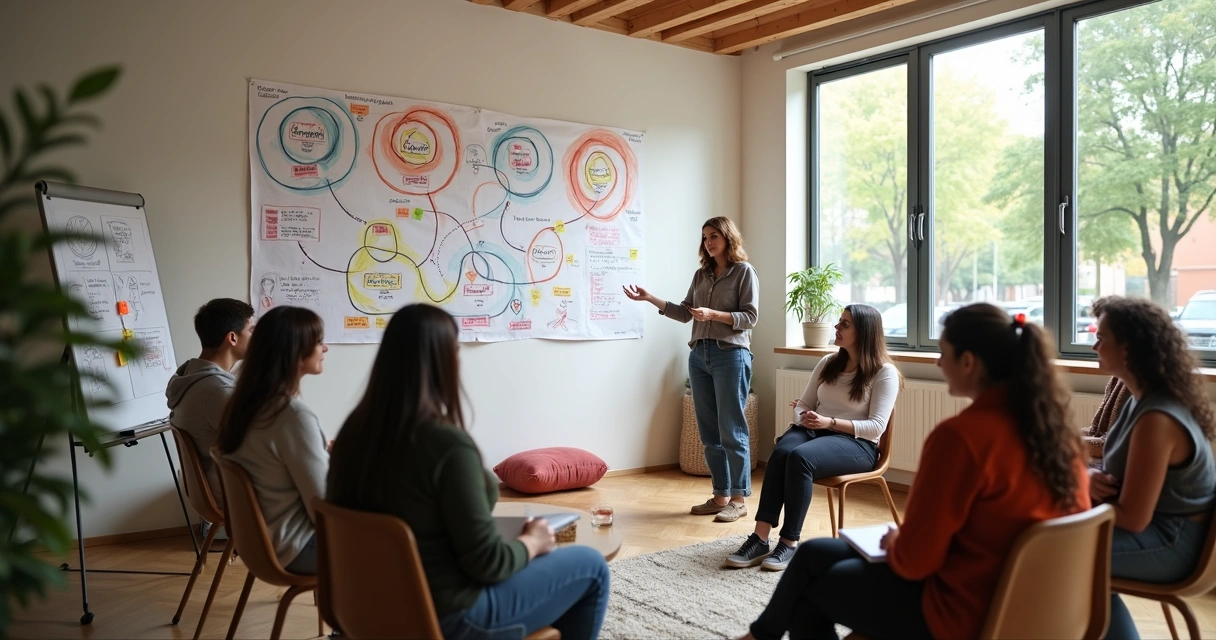
We often think community projects rise or fall because of money, planning, or turnout. Those things matter. Still, in our experience, another force keeps shaping the outcome from the inside. It is emotion.
When a group feels heard, trust grows. When people feel ignored, tension spreads. That emotional movement does not stay inside one person. It passes through meetings, messages, decisions, and silence. This is where emotional feedback loops begin.
Emotion spreads through structure.
An emotional feedback loop is a repeated cycle in which feelings shape behavior, and behavior shapes feelings again.
In a neighborhood project, for example, one volunteer feels dismissed. That person speaks less. Others read the silence as distance. The group becomes colder. The first volunteer now feels even less welcome. The loop tightens. The same process can work in the other direction too. A small act of respect can increase safety, and safety can increase participation.
We have seen many groups focus only on visible tasks while missing the emotional pattern underneath. If we want stronger local action, we need to notice both.
Why emotional loops matter in group work
Community projects bring together different histories, needs, and stress levels. People may agree on the goal and still react in very different ways during conflict, delay, or change. That is normal. What matters is whether the group can read these reactions early.
A University of British Columbia study with causal loop mapping showed how social and emotional well-being can be understood through many linked variables and feedback loops. We think this matters for community work because local groups are also systems. A tense meeting is rarely just a tense meeting. It may be the visible point of a larger emotional chain.
Groups do not only exchange information. They also exchange emotional signals.
This is why emotional education should not be treated as an extra topic. It shapes participation, trust, and follow-through. We can deepen this view through topics such as emotional education and how feelings become patterns in shared spaces.
How to identify the loop already active
Before we try to change a group, we need to name the loop that is already running. Many teams skip this step. They rush into solutions. Then nothing really shifts.
We suggest starting with a simple question: what feeling keeps returning, and what behavior keeps feeding it?
A local food drive may show this pattern:
Leaders feel pressure to deliver results fast.
They shorten discussion and make quick choices.
Volunteers feel that their voice has little value.
Engagement drops and fewer people take initiative.
Leaders feel even more pressure because help decreases.
That is a loop. It is emotional, behavioral, and social at the same time.
Sometimes we notice the pattern only after someone says, “Every meeting ends the same way.” That sentence is often a signal. Another path to insight is studying collective behavior in real situations, not just individual reactions.
How to build a healthy loop on purpose
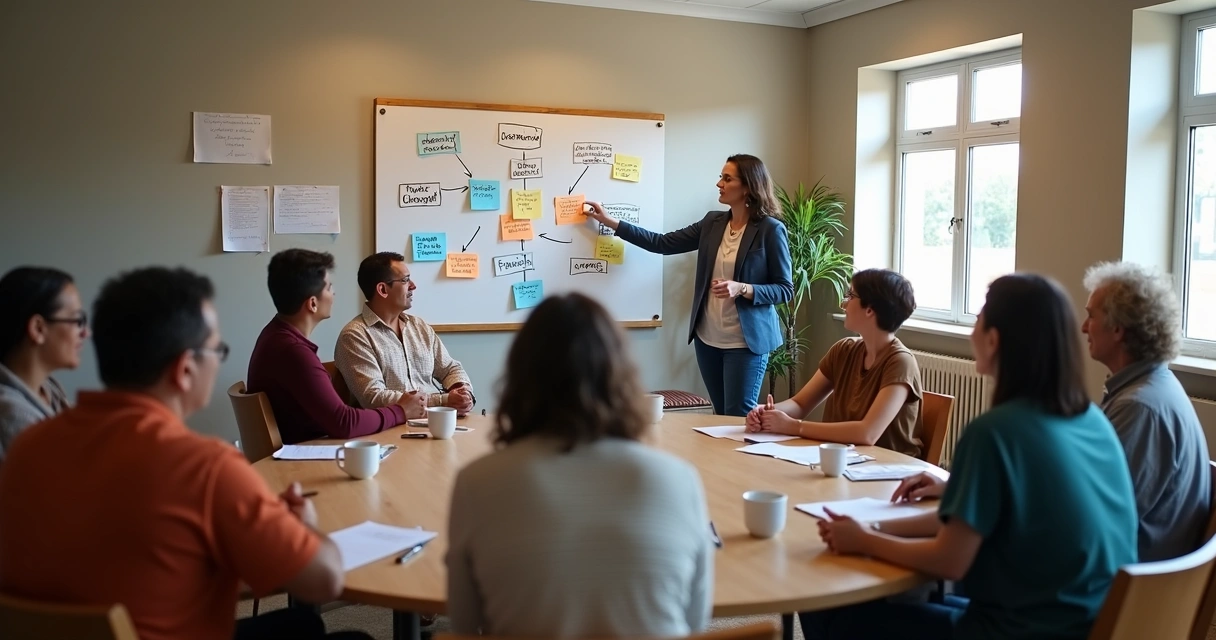
Once we see the pattern, we can begin shaping a better one. This does not mean making every meeting soft or avoiding disagreement. It means creating a rhythm where emotions are noticed early and handled with care.
We usually work with a sequence like this:
Name the emotional climate at the start.
Create one safe channel for honest feedback.
Respond in visible ways to what is shared.
Check whether the response changed the mood and behavior.
Repeat the process until trust becomes part of the group habit.
For instance, one youth project we observed began each session with a one-word emotional check-in. At first, people gave polite answers. Later, the words became more real: tired, hopeful, irritated, unsure. That small shift changed the room. Coordination improved because people were no longer guessing each other’s state.
Healthy loops begin when people see that emotional truth leads to a fair response.
If a person says they feel shut out, and the group adjusts the process, trust rises. If nothing changes, silence returns. This is why self-awareness and group method must go together. Resources on self-regulation can help people notice their state before it spills into the whole team.
Tools that work in real projects
We do not need complex systems to start. We need tools that people will actually use. The best ones are simple, repeatable, and emotionally clear.
Here are a few that tend to help:
Opening check-ins with one word or one sentence.
Anonymous pulse forms after meetings.
A rotating reflection role, where one person observes group tone.
Short repair talks after conflict, with time limits and clear focus.
Monthly review of recurring emotional themes, not just task progress.
These tools matter because repeated patterns can become stronger over time. A research analysis of large network models on feedback loops and symptom levels found that more feedback loops were linked to higher symptom levels, even if the effect later leveled off. In simple terms, when harmful loops multiply, distress can spread through a system.
That same logic can help us in local work. We can reduce strain by interrupting bad loops early, before they stack on top of each other.
What to do when conflict appears
Conflict does not mean the project is failing. Sometimes it means the hidden emotional layer is finally visible. That can be painful, but also honest.
We think the first mistake is treating conflict as only a content issue. Two people may argue about schedules while actually reacting to disrespect, fear of exclusion, or old resentment. If we fix only the calendar, the loop stays alive.
This is where shared values help. A group grounded in social ethics is more likely to respond with fairness instead of blame.
We can ask:
What emotion is driving this reaction?
What behavior followed that emotion?
How did the group interpret that behavior?
What response would reduce fear and restore clarity?
A Penn State study on emotion system dynamics in adolescents found varied coordination patterns, including negative feedback loops linked to regulation and positive loops linked to emotional concordance. We see a practical lesson here. Not every emotional cycle is harmful. Some loops calm the system. Others intensify it. Our job is to tell the difference.

How deeper patterns shape local projects
Some reactions in groups feel larger than the moment. A simple suggestion causes strong defensiveness. A small delay creates unusual anger. We have learned to treat these moments with respect. They may point to emotional inheritance carried by families, institutions, or the wider community.
Some group tensions are not created in the room, but they are repeated in the room.
When we recognize that, we stop personalizing every reaction. This does not remove accountability. It widens understanding. In many cases, work related to systemic constellation can support reflection on repeating group patterns and hidden loyalties.
Conclusion
Emotional feedback loops are not abstract theory. They are visible in attendance, tone, trust, and follow-through. If we ignore them, they still shape the project. If we work with them, the group becomes more honest and more steady.
We believe strong community action grows when people feel safe enough to tell the truth, and when that truth changes how the group works. That is the loop we want to build. Not a perfect group. A responsive one.
Frequently asked questions
What is an emotional feedback loop?
An emotional feedback loop is a repeated cycle where feelings affect behavior, and that behavior creates more of the same feeling in a person or group. In community projects, this can either build trust or increase tension.
How to use emotional feedback loops?
We can use them by noticing recurring emotions, linking them to group behaviors, and creating clear responses that improve safety and trust. Check-ins, reflection rounds, and visible changes after feedback are good starting points.
Why are emotional feedback loops important?
They matter because emotions shape participation, cooperation, and conflict. A healthy loop can strengthen belonging, while a harmful loop can reduce engagement and damage the project from within.
How can I collect emotional feedback?
We can collect emotional feedback through short check-ins, anonymous forms, small group conversations, and observation of repeated social patterns. The method should feel safe, simple, and easy to repeat.
What are the best tools for feedback?
The best tools are usually the simplest ones: one-word check-ins, short surveys, listening circles, reflection notes, and follow-up talks after conflict. What works best is the tool your group can use often and respond to with care.